



In packaging production, carton sizes are rarely identical across every product. A manufacturer may need to package several product models, different quantities, or multiple retail specifications on the same production line. Changing carton dimensions can affect more than the appearance of the finished package. It also influences product feeding, carton forming, insertion accuracy, and sealing.
This is where a full automatic cartoning machine needs to offer sufficient adjustment flexibility. Rather than handling only one fixed carton specification, a well-designed automatic cartoning machine should support different packaging requirements through coordinated mechanical adjustments and suitable machine configurations.
For manufacturers working with pharmaceutical, food, مستحضرات التجميل, and consumer goods, understanding how these adjustments work is important when selecting cartoning equipment.
1. Carton Dimensions Determine the Machine Configuration
The first consideration is the carton itself. Length, width, and height determine whether a carton can pass smoothly through the machine’s feeding and forming mechanisms.
A carton that is too large or too small for the current setup may cause feeding problems, poor forming results, or inaccurate product insertion. Therefore, carton dimensions should be confirmed before configuring an automatic cartoning machine.
In practical production, manufacturers should pay attention to:
- Carton length: Influences the positioning and feeding requirements.
- Carton width: Affects the space available for product insertion.
- Carton height: Determines the carton opening and forming arrangement.
- Carton material: Influences folding performance and structural stability.
- Carton design: Different flap structures may require different sealing arrangements.
These details help determine whether the existing machine configuration can accommodate a new carton specification or whether additional adjustments are necessary.
2. Adjustable Carton Feeding and Magazine Systems
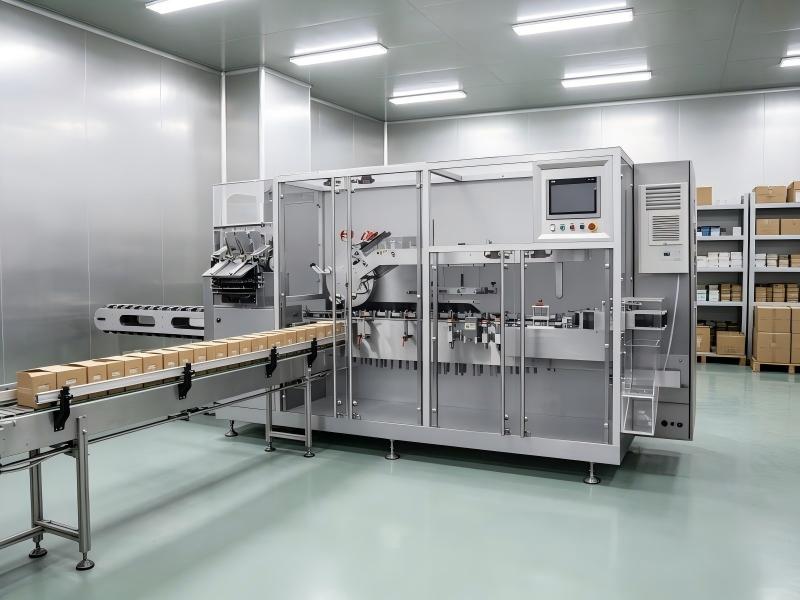
Carton feeding is one of the first stages affected when changing carton sizes. The carton magazine stores flat carton blanks and supplies them to the forming mechanism.
When carton dimensions change, the magazine guides and positioning components may need adjustment. Their purpose is to keep cartons aligned and ensure that individual blanks are supplied consistently.
If the guides are too narrow, larger cartons may not enter smoothly. If they are too wide, smaller cartons may shift during feeding.
A properly adjusted carton feeding system helps maintain a stable supply of carton blanks and reduces interruptions caused by misalignment. For manufacturers handling multiple packaging specifications, convenient adjustment and repeatable positioning are particularly important.
3. How Carton Forming Adapts to Different Sizes
After a carton blank is picked up, it must be opened and formed into the required shape before product insertion.
Different carton sizes can behave differently during this process. Larger cartons may require more space and support, while smaller cartons need accurate positioning to prevent deformation.
The carton forming mechanism must work with the dimensions and folding characteristics of the blank. The quality of the carton crease lines, board thickness, and material stiffness can also influence how easily the carton opens.
For this reason, changing carton sizes involves more than adjusting the width of a guide rail. The forming process should be checked to make sure that the carton opens fully and maintains its intended shape.
4. Product Insertion Must Match the Carton Size
Once the carton has been formed, the product feeding and insertion mechanisms need to place the product inside accurately.
This stage can become more complicated when a packaging line handles products with different dimensions or packaging arrangements.
على سبيل المثال, a cosmetics carton may contain a single product, while a consumer goods carton may require several components to be inserted together. Pharmaceutical packaging may also involve product leaflets or other packaging materials, depending on the application.
The product feeding system and insertion position must therefore correspond to the internal space of the carton.
A suitable automatic cartoning machine coordinates carton positioning with product delivery, helping reduce the risk of products entering at an incorrect angle or interfering with the carton opening.

5. Carton Sealing Requirements May Also Change
Different carton designs can use different closing methods. Tuck-in flaps, adhesive sealing, and other carton structures may require different operating arrangements.
When changing carton specifications, manufacturers should check whether the closing mechanism is compatible with the new carton design.
The carton should be properly formed before sealing begins. If the product is not positioned correctly or the carton flaps are misaligned, the finished package may not close as intended.
Consistent sealing depends on the relationship between carton dimensions, product positioning, and the machine’s closing mechanism.
6. Key Factors When Changing Carton Sizes
Changing carton sizes should be treated as a complete packaging adjustment rather than a single mechanical setting. The following factors are worth checking before restarting production.
| Adjustment Area | What to Check | Why It Matters |
|---|---|---|
| Carton magazine | Guide width and carton positioning | Maintains consistent carton feeding |
| Carton forming | Opening and folding alignment | Helps prevent carton deformation |
| Product feeding | Product orientation and delivery position | Supports accurate insertion |
| Carton insertion | Carton and product size compatibility | Reduces insertion problems |
| Carton sealing | Flap position and closing method | Helps achieve consistent carton closure |
| Machine operation | Timing and coordination | Supports stable production |
A practical approach is to test each new carton specification before full production. This allows operators to identify alignment issues, feeding interruptions, and sealing problems before they affect a larger batch.
7. Choosing a Full Automatic Cartoning Machine for Multiple Carton Sizes
For companies handling several product lines, machine flexibility should be considered alongside production requirements and packaging quality.
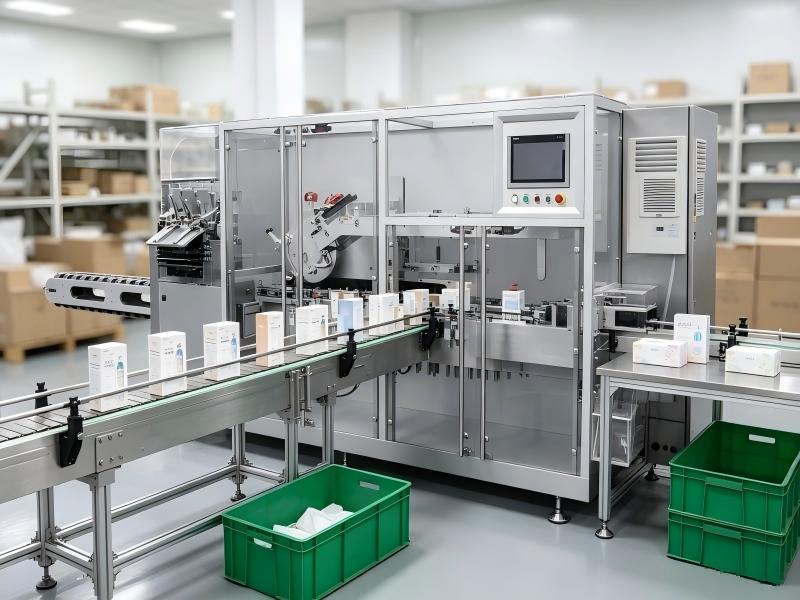
A full automatic cartoning machine is designed to coordinate product feeding, carton forming, product insertion, carton sealing, and finished package output. Its ability to accommodate different carton sizes depends on the machine’s working range, mechanical design, and available adjustment configurations.
The YCZ-300 from Mystech Woods is an advanced automatic packaging machine designed for pharmaceutical, food, مستحضرات التجميل, and consumer goods applications. It automatically completes the main cartoning processes, including product feeding, carton forming, product insertion, carton sealing, and output.
The machine is designed to support various product types and carton sizes, with adjustment options intended to meet different production requirements. Its structure and operating configuration make it suitable for businesses looking to improve packaging automation and reduce manual handling.
As a professional packaging equipment provider, Mystech Woods can also offer customized cartoning solutions according to customer requirements, including machine configurations, packaging specifications, and production line integration.
Before confirming a machine configuration, manufacturers should provide carton drawings, product dimensions, and packaging samples. These details help determine whether the selected equipment is suitable for the intended packaging applications.
Final Thoughts
Automatic cartoning machines handle different carton sizes through coordinated adjustments to carton feeding, forming, product insertion, and sealing systems. Each stage needs to match the dimensions and structure of the carton to maintain consistent packaging results.
For manufacturers with multiple product specifications, the key is not simply choosing a machine that can process different cartons. It is selecting equipment with an appropriate adjustment range and a configuration that matches actual production requirements.
With its YCZ-300 full automatic cartoning machine, Mystech Woods provides a packaging solution designed for different product categories and carton specifications. Evaluating carton samples and product dimensions before purchasing remains an important step toward choosing the right equipment.