


In many packaging facilities, carton sizes change throughout the production day. A manufacturer may need to strap small retail cartons for one order and larger shipping boxes for another. For businesses handling multiple product categories, this variation creates a challenge for packaging automation: the machine must accommodate different dimensions while maintaining reliable package positioning and consistent strapping results.
An automatic strapping machine can be configured for different packaging requirements, but flexibility depends on its mechanical design, adjustment range, and compatibility with the production line. Understanding how these elements work together is important for manufacturers planning to automate their packaging operations.
One Production Line, Different Packaging Requirements
Not all cartons behave in the same way during strapping. A compact carton may be lightweight and easy to move, but its smaller dimensions can make accurate positioning more difficult. Larger boxes generally provide more space for strap placement, yet their weight and dimensions may require stronger conveyor support and a suitable machine opening.
There is also a difference between handling regular cartons and processing packages with unusual proportions. A long, narrow box, for example, may require a different positioning arrangement from a square carton of similar weight. This is why machine selection should start with the actual packaging range rather than a single representative carton. Buyers should identify the smallest and largest packages, their weights, materials, and the required strapping positions. These details provide a clearer basis for selecting an automatic carton strapping machine.
Where Does Size Adjustment Take Place?
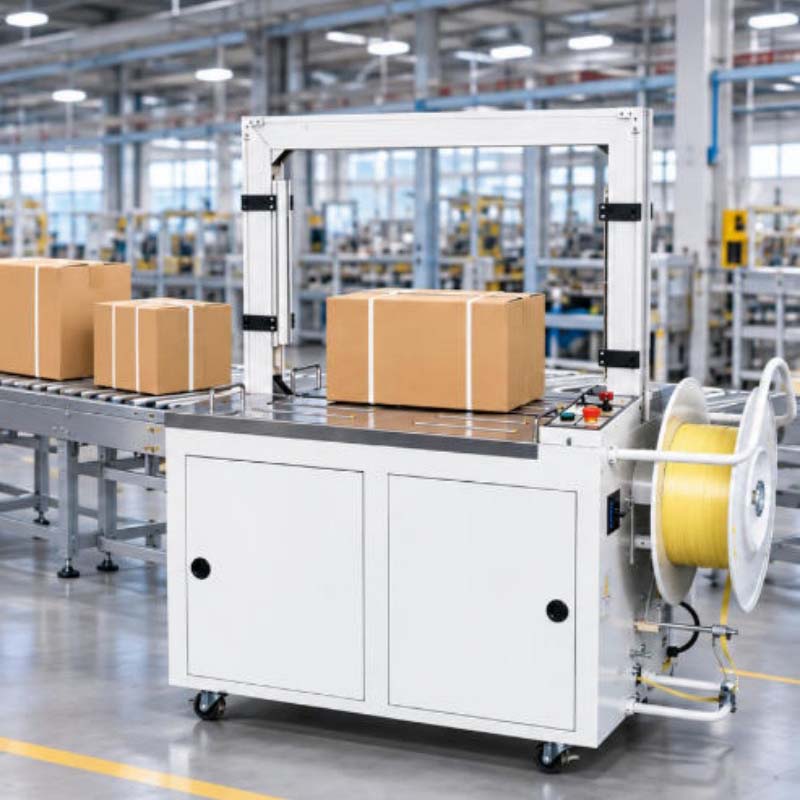
Adapting a machine to different package dimensions usually involves several parts working together. The following areas deserve particular attention.
Machine arch and working area
The arch determines the space available for packages to pass through the strapping station. Its opening must accommodate the largest carton in the intended production range. However, selecting an oversized arch without considering smaller packages may also create positioning challenges.
Conveyor and package guides
The conveyor moves cartons into the strapping area. Adjustable side guides or positioning components, where available, help keep packages aligned during transportation. This is especially useful when a facility handles cartons with noticeably different widths.
Strap positioning
The strap needs to pass around the correct part of the package. Its position should be appropriate for the carton dimensions and the way the goods are packed. For some applications, the location of the strap is just as important as the tension applied.
Control and adjustment settings
Depending on the machine configuration, operators may need to adjust conveyor settings, strap tension, or other operating parameters when changing carton sizes. Some equipment may offer additional sensing or programmable functions, but these capabilities should be verified with the manufacturer.
The Challenge Is Not Just Fitting the Carton
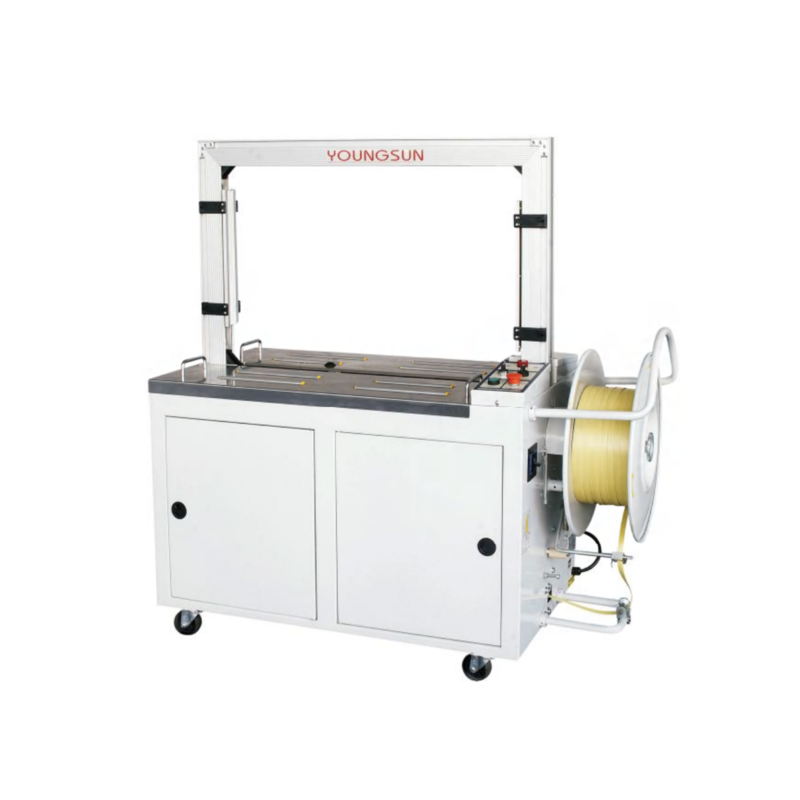
A carton passing through the machine does not necessarily mean the strapping process will be satisfactory. The package must remain stable, the strap must be correctly positioned, and the tension must suit the material being secured.
Consider two different applications. A lightweight corrugated box may be damaged if excessive tension is applied, while a heavier shipping carton may require a stronger hold to keep its contents stable during handling. Applying the same settings to both packages may not produce the desired result.
Strap material also matters. Different strap widths, thicknesses, and material properties can influence the machine’s operating requirements. When selecting an automatic box strapping machine, buyers should confirm that its tension adjustment range and supported strap specifications match their packaging materials.
What Happens When Package Sizes Change Frequently?
For factories handling multiple orders, the time required to change machine settings can affect daily production efficiency.
If operators need to make several manual adjustments every time carton dimensions change, the packaging process may experience unnecessary interruptions. A practical machine configuration should make routine adjustments accessible and understandable.
The required changeover procedure depends on the equipment. Some machines may only need guide adjustments, while others may require changes to multiple settings. Where production involves frequent size variations, buyers should ask the manufacturer to demonstrate the changeover process using actual cartons.
It is also worth checking whether the machine can maintain consistent results after repeated adjustments. A machine that handles one carton size well but requires extensive setup for every other format may not be suitable for mixed-product operations.

Matching the Machine to the Entire Packaging Line
Package size flexibility should also be considered in relation to the surrounding equipment. An automatic strapping machine may be installed after a carton sealer or connected to a conveyor system that transfers finished packages to a labeling or sorting station.
In these situations, differences in conveyor height, package direction, transportation speed, and available installation space can affect how smoothly the equipment operates together.
For example, a large carton may move through the upstream conveyor without difficulty but become misaligned at the strapping station if the guide arrangement is unsuitable. Smaller cartons may require different positioning support to prevent unwanted movement.
When evaluating an automatic strapping machine for packaging lines, buyers should review the complete material flow rather than assessing the strapping unit separately. This is particularly important when the equipment is intended to replace a manual packaging station or become part of an existing automated system.
A Practical Checklist Before Equipment Selection
Before requesting a machine quotation, packaging companies can prepare a basic specification sheet covering their actual production requirements.
| Evaluation Area | Information to Prepare |
|---|---|
| Package dimensions | Minimum and maximum width, height, and length |
| Package weight | Weight range of the cartons or products |
| Packaging material | Corrugated carton, rigid box, or other packaging |
| Strapping requirements | Strap material, width, and required strap positions |
| Production conditions | Daily output and frequency of size changes |
| Equipment integration | Conveyor dimensions, working height, and line layout |
| Adjustment requirements | Manual adjustments or available automatic settings |
Providing this information helps manufacturers assess the appropriate machine configuration and identify potential limitations before production begins. Where possible, sending physical samples or arranging a packaging test can make the evaluation more reliable.
Choosing Flexibility That Matches Actual Production Needs
A machine does not need to support every possible carton size to be useful. What matters is whether its working range covers the packages a business actually processes, and whether it can handle those packages without complicated adjustments or inconsistent strapping.
For packaging equipment buyers, the decision should balance package dimensions, production volume, changeover frequency, and integration requirements. These factors are more meaningful than focusing on the machine’s maximum opening size alone.
Mystech Woods understands that packaging operations differ from one manufacturer to another. By reviewing carton specifications, strapping requirements, and production line conditions, buyers can identify an automatic strapping solution that fits their actual workflow and supports future packaging needs.