


Manual shrink wrapping is often a practical starting point for businesses with relatively low packaging volumes. It requires limited equipment investment and can work well when orders are small and product requirements are straightforward.
As a business grows, however, packaging can become harder to manage. Orders increase, delivery schedules become tighter, and operators spend more time sealing products. What once seemed like a simple process can gradually turn into a bottleneck.
This is when a semi-automatic shrink wrapping machine may be worth considering. The goal is not simply to replace manual work with equipment, but to make packaging more consistent, manageable, and suitable for the business’s current production needs.
1. When Manual Packaging Starts Holding Back Production
One of the first signs that it may be time to upgrade is a growing gap between production output and packaging capacity. Products may be ready for shipment, but operators cannot package them quickly enough. During busy periods, the team may need to work longer hours or add temporary staff just to keep orders moving.
Manual shrink wrapping involves several steps, including positioning the product, arranging the film, sealing it, and transferring it to the shrink tunnel. When these tasks are repeated throughout the day, small delays can add up.
A semi-automatic shrink wrapping machine helps organize this process by handling the sealing operation through a more consistent mechanical cycle. Operators still have a role in product positioning and material handling, but repetitive sealing work becomes easier to standardize. For businesses managing regular orders or medium production volumes, this can help create a smoother workflow without the cost and complexity of a fully automatic packaging line.
2. Inconsistent Packaging Quality Is Becoming a Problem
Packaging does more than protect a product. It also affects how the product is presented to customers, retailers, and distributors.
With manual shrink wrapping, the final result can vary depending on operator technique, film positioning, and working conditions. Some packages may have neat, tight wrapping, while others show uneven seals, excess film, or an untidy appearance.
These differences may seem minor at first, but they become more noticeable when products are shipped in large quantities or displayed on retail shelves.
A semi-automatic shrink wrapping machine provides a more controlled sealing process, helping operators achieve more consistent results. The final appearance still depends on selecting the right film and setting suitable shrink tunnel conditions.
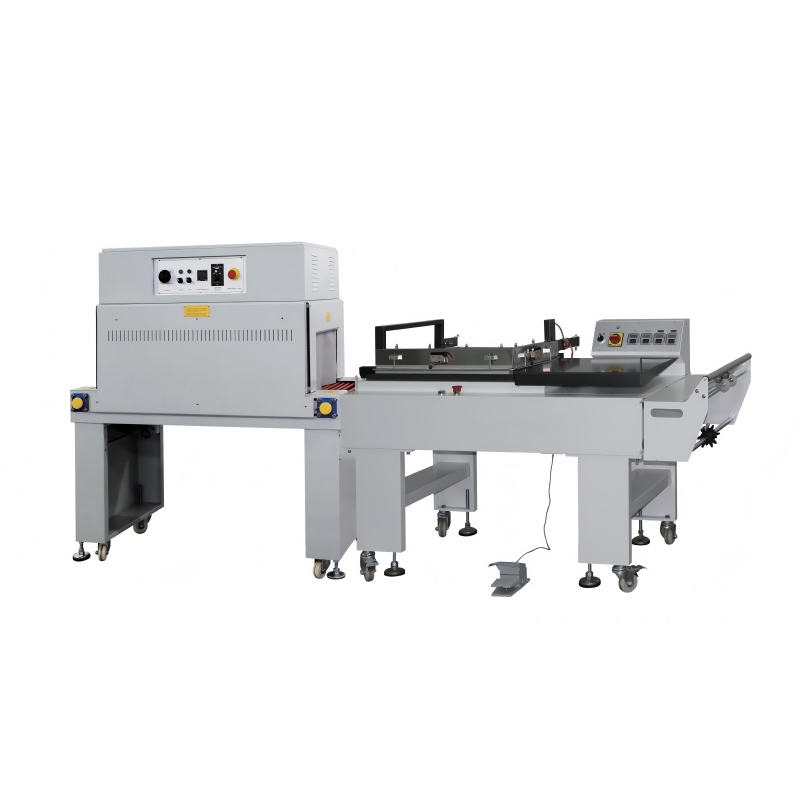
It is important to understand that sealing and shrinking are two separate stages. The sealing machine closes the film around the product, while the shrink tunnel applies heat to help the film conform to the product’s shape. Both stages need to work properly to achieve a professional finish.

3. Rising Labor Costs Are Reducing Packaging Efficiency
When order volumes grow, businesses often respond by assigning more workers to packaging. Although this may help meet short-term demand, it also increases labor costs and creates additional training and scheduling requirements.
The better question is whether every step in the existing process needs to be performed manually.
A semi-automatic shrink wrapping machine can reduce repetitive sealing tasks and help operators process products more consistently. It does not eliminate the need for labor, but it can make better use of the people already working on the packaging line.
Before investing in equipment, compare the current cost of manual packaging with the expected cost of the new process. Include labor hours, film consumption, rejected packages, maintenance, and energy use.
The potential savings will vary depending on the product and production setup. A realistic calculation based on actual operating data is more useful than relying on advertised machine speeds alone.
4. Your Product Range Is Becoming More Diverse
Businesses that handle several product categories often face a different challenge: maintaining an efficient packaging process while dealing with different product sizes and packaging requirements.
Food products, beverages, cosmetics, electronics, stationery, and daily consumer goods may all require shrink film packaging, but their dimensions and handling needs can vary considerably.
A suitable semi-automatic shrink wrapping machine can offer a practical balance between flexibility and process consistency. However, not every machine can accommodate every product. Sealing dimensions, product height, film type, and packaging arrangement all need to be considered.
For companies looking to improve their existing setup, the Mystech Woods YS-SL-6045B is a pneumatic L-bar sealing machine designed for shrink film packaging applications. It uses a bottom sealing system and operates with a shrink tunnel to produce tight, secure packaging.
Its intended applications include food, beverages, cosmetics, pharmaceuticals, electronics, stationery, and other consumer goods. Before selecting this model, buyers should confirm that the machine’s working dimensions and configuration suit their actual products.
5. Is Semi-Automatic Equipment the Right Next Step?
Not every business needs to automate its packaging process immediately. If production volumes remain low, orders are irregular, and manual packaging does not cause delays, continuing with the existing method may be the more economical choice.
The decision changes when packaging becomes a recurring operational problem.
For example, a business may need to reconsider its setup when operators regularly struggle to meet shipment deadlines, packaging quality varies between batches, or labor requirements continue to rise with order volume.
A semi-automatic shrink wrapping machine can be a sensible middle ground for businesses that need greater consistency and productivity but are not yet ready for full automation.
It is also worth looking beyond current demand. If the business expects to introduce new products or increase order volumes, choosing equipment with suitable operating capacity can help avoid another upgrade in the near future.
6. What Should You Check Before Buying a Semi-Automatic Shrink Wrapping Machine?
Once an upgrade makes sense, the next step is to find equipment that fits the actual packaging process rather than choosing solely on price.
Start with the largest product dimensions and the way products will be arranged during sealing. Check the machine’s effective sealing area, compatible shrink films, pneumatic requirements, and maintenance needs.
The shrink tunnel also deserves attention. Its working dimensions and heating performance should be suitable for the products and film being used. A sealing machine alone cannot complete the entire shrink wrapping process.
For businesses considering the Mystech Woods YS-SL-6045B, it is advisable to confirm the technical specifications, review the expected output for the intended application, and test representative products before placing an order.
These checks help establish whether the machine can meet day-to-day production requirements, rather than simply looking suitable on paper.
Conclusion
The right time to upgrade from manual shrink wrapping is not determined by order volume alone. It is when the existing process starts affecting productivity, labor costs, packaging consistency, or delivery schedules.
A semi-automatic shrink wrapping machine can help businesses establish a more controlled packaging process while retaining the flexibility of operator-assisted production. For medium-volume operations, this can be a practical step toward improving efficiency without moving directly to a fully automatic line.
Mystech Woods offers the YS-SL-6045B pneumatic L-bar sealing machine for businesses using shrink film packaging. By evaluating product dimensions, film compatibility, sealing requirements, and shrink tunnel performance, buyers can determine whether this solution fits their production needs.
Ultimately, a worthwhile upgrade should solve a real packaging problem and support the business as its production requirements evolve.