


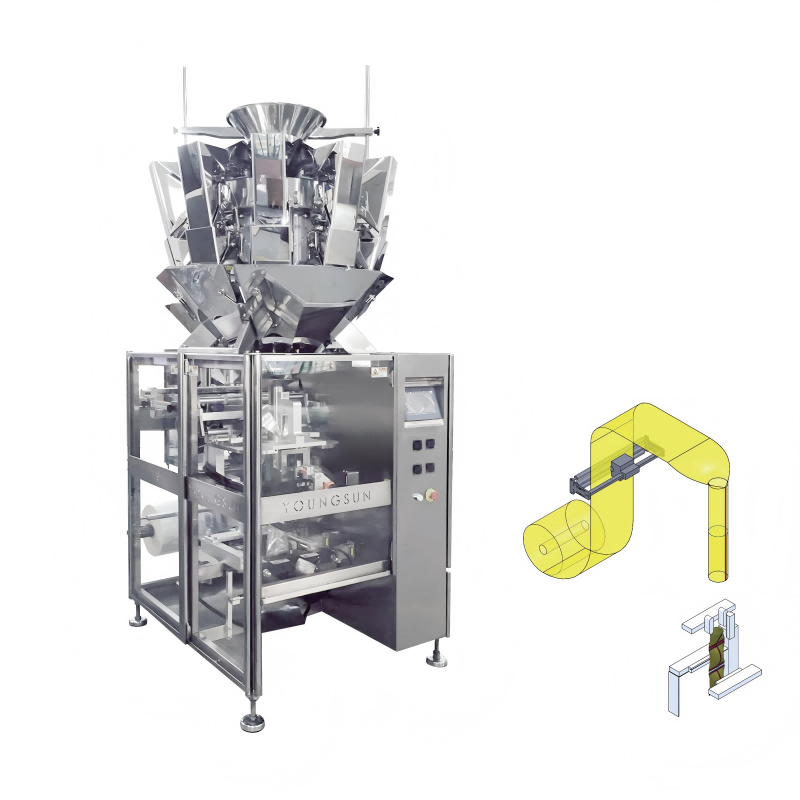
In automated packaging, product characteristics can have a significant impact on weighing accuracy, production speed, and overall packaging efficiency. While factors such as machine configuration and target weight are important, product shape is another detail that manufacturers should not overlook.
A combination multihead weigher is designed to handle a wide range of bulk products, including granular materials, snacks, frozen foods, pet food, and hardware components. However, products with different shapes may behave differently as they move through the weighing system. Some flow smoothly, while others may roll, overlap, stick together, or become damaged during handling.
Understanding how product shape affects equipment performance helps manufacturers select the right packaging solution, optimize operating parameters, and achieve more consistent results.

1. Why Does Product Shape Matter in Multihead Weighing?
A multihead weigher typically distributes products across multiple weighing heads and calculates a suitable combination of weights to reach the target amount. For this process to work efficiently, products must move through the feeding system consistently and enter the weighing hoppers in a controlled manner.
Product shape influences several aspects of this process:
- Material flow: Round or smooth products may roll quickly, while flat or irregular items may move less consistently.
- Product distribution: Differences in shape can affect how evenly products spread across the distribution system.
- Weighing stability: Irregular feeding or overlapping products may make it more difficult to maintain consistent weighing cycles.
- Product protection: Fragile or sharp-edged items may require careful handling to reduce breakage or equipment wear.
These factors do not mean that one product shape is inherently better than another. Instead, the key is to match the machine configuration and operating settings to the physical characteristics of the material being packaged.
2. How Different Product Shapes Affect Machine Performance
Different products present different handling challenges. Understanding these differences helps manufacturers determine which equipment features and settings deserve attention.
Round and Granular Products
Products such as nuts, seeds, beans, and certain confectionery items often flow relatively freely through the feeding system. However, highly mobile products may roll or move rapidly, potentially affecting distribution and feeding consistency if the system is not properly adjusted.
For these materials, feeding speed, vibration settings, and hopper configuration can influence how consistently products reach the weighing heads.
Flat, Irregular, and Fragile Snacks
Potato chips, crackers, and other lightweight snacks can be more challenging to handle. Their irregular shapes may cause overlapping or uneven distribution, while fragile products can break if exposed to excessive vibration or impact.
A suitable combination multihead weigher should be configured to balance efficient feeding with gentle product handling. Appropriate contact surfaces, feeding settings, and drop heights may help reduce product damage, depending on the machine design.
Frozen Food Products
Frozen foods, including frozen vegetables and selected meat products, may vary considerably in shape, size, and surface condition. Pieces can stick together, move unevenly, or enter the weighing system in inconsistent quantities.
For these applications, buyers should consider the product’s temperature, moisture conditions, tendency to clump, and feeding behavior. The weighing and packaging system must also be suitable for the intended operating environment and cleaning requirements.
Pet Food and Hardware Components
Dry pet food often consists of relatively uniform pieces, although kibble shape and size can vary between formulations. These differences may influence feeding behavior and the volume occupied by a given weight.
Hardware products, such as screws, nuts, and small metal components, introduce different considerations. Their weight, surface characteristics, and potential to interlock can affect feeding and discharge. Equipment suitability should be evaluated according to the specific material, required accuracy, and production conditions.
3. Does Product Shape Affect Weighing Accuracy?
Product shape can influence weighing accuracy indirectly, but it is not the only determining factor.
A multihead weigher calculates weight combinations using measurements from individual weighing heads. Its performance also depends on load-cell characteristics, machine calibration, target weight, product distribution, and the consistency of feeding.
For example, irregularly shaped products may feed unevenly or become caught between components. If this causes inconsistent material delivery, the system may experience slower cycles or greater variation in the amount entering each weighing hopper.
Meanwhile, products with similar shapes can still behave differently because of their density, surface friction, moisture content, and size distribution.
To evaluate a combination multihead weigher accurately, manufacturers should test the actual product under representative production conditions. Important indicators include weighing accuracy, average cycle time, product damage, and the consistency of the finished package weight.
4. How Product Shape Influences Packaging Speed
Packaging speed depends on more than the number of weighing heads or the rated capacity of the equipment. The entire process must work together, from product feeding and weighing to discharge, bag forming, filling, and sealing.
If products flow smoothly and distribute consistently, the weighing system may complete cycles more efficiently. In contrast, irregular feeding, product bridging, or excessive breakage can interrupt the process and reduce actual output.
This is why the combination of a multihead weigher and a vertical form-fill-seal (VFFS) packaging machine matters.
The multihead weigher measures and dispenses the product, while the VFFS machine forms bags from packaging film, fills them, and seals the finished packages. Their operating cycles must be coordinated to avoid unnecessary waiting between weighing and packaging.
Mystech Woods offers an integrated automatic weighing and packaging solution designed for granular products, snacks, frozen foods, pet food, hardware, and other bulk materials. The system combines a high-precision multihead weigher with a VFFS packaging machine to support automated weighing and packaging operations.
Its suitability for a particular product should be confirmed by checking the product’s dimensions, shape, flow characteristics, target weight, and required production rate.

5. How Can Manufacturers Optimize a Combination Multihead Weigher for Different Products?
Before selecting or adjusting a weighing and packaging system, manufacturers should evaluate the material itself rather than relying solely on general equipment specifications.
The following steps can help improve system performance:
Evaluate product dimensions and shape. Determine whether the material is round, flat, elongated, irregular, fragile, or prone to interlocking. Significant variation in product size may require additional attention during equipment selection.
Check material flow. Observe how the product moves along feeding channels and enters the weighing hoppers. Inconsistent distribution may indicate that feeding parameters or machine configuration need adjustment.
Define the target weight and output requirements. Product shape should be considered alongside the required pack weight and production speed. A configuration that works well for small snack packs may not deliver the same results with heavier or bulkier products.
Test product handling and weighing performance. Run representative samples to evaluate weighing consistency, cycle time, breakage, and discharge behavior. Testing is especially important for fragile, sticky, or irregular materials.
Verify packaging compatibility. The VFFS machine, bag dimensions, and laminated packaging film must suit the product and target application. For pillow bags, manufacturers should also evaluate filling behavior and sealing quality under actual operating conditions.
These checks help buyers determine whether a proposed system can meet their production requirements before committing to a large-scale installation.
6. Choosing the Right Weighing and Packaging Solution
There is no single multihead weigher configuration that is ideal for every product. The right solution depends on the relationship between product shape, weight, material behavior, packaging format, and production targets.
When comparing equipment suppliers, buyers should provide representative product samples and clear technical requirements. Useful information includes product dimensions, typical and maximum piece sizes, target package weight, desired output, packaging film specifications, and any special handling or hygiene requirements.
Mystech Woods’ combination multihead weigher and packaging machine integrates automatic weighing with vertical form-fill-seal packaging. It supports pillow bag packaging and works with various laminated films, helping manufacturers streamline their packaging process and reduce potential product giveaway through controlled weighing.
However, actual weighing accuracy, packaging speed, and suitability for specific products depend on the selected configuration and operating conditions. Product testing and confirmation of technical specifications remain essential parts of the purchasing process.
Conclusion
Product shape affects how materials move, distribute, and discharge throughout a combination multihead weigher. Round, flat, fragile, frozen, and irregular products can each present different challenges, influencing weighing consistency, product protection, and packaging speed.
For manufacturers seeking a reliable automatic weighing and packaging solution, evaluating real product characteristics is an important step in equipment selection. By testing material flow, confirming weighing performance, and coordinating the multihead weigher with the VFFS packaging machine, businesses can make more informed decisions about their packaging lines.
Mystech Woods provides an integrated approach to automatic weighing and packaging for a range of bulk products. Matching the system to the product’s shape and handling requirements helps establish a more suitable foundation for efficient and consistent packaging operations.