


Not every factory produces the same product all day. One production line may handle several carton sizes, while another needs to switch between different packaging formats as customer orders change. When each product requires a different palletizing arrangement, manual adjustments can take up valuable production time.
Buying a separate machine for every task is not always practical, especially for manufacturers working with limited floor space or changing order volumes. This is where a collaborative robot palletizer can offer a more flexible approach. With the right control system and palletizing configuration, one robot may be able to handle multiple tasks without requiring a completely separate setup for every product.
So, what should manufacturers consider when choosing a robotic palletizing system for different production requirements?
1. Start with the Products and Palletizing Requirements
Before selecting a palletizing robot, manufacturers need to understand what the machine will actually handle. Cartons, packaged consumer goods, pharmaceutical products, and metal components can differ considerably in weight, dimensions, packaging stability, and stacking requirements.
These differences affect how products should be picked up, positioned, and arranged on a pallet.
For example, a factory producing several carton sizes may need different stacking patterns to make effective use of pallet space. A manufacturer handling heavier packages may place greater emphasis on payload capacity and load stability.
When evaluating an automatic palletizing robot, consider the following:
- Product weight and dimensions
- Required stacking patterns and pallet sizes
- Daily output and production schedules
- Changes between product types
- Available floor space and equipment layout
Defining these requirements early helps determine whether one robot can handle the intended workload or whether additional equipment or configurations will be necessary.
2. Make Palletizing Pattern Changes Easier
One of the biggest challenges in mixed-product production is changing from one palletizing task to another. If every change requires complicated programming or extensive manual adjustment, the flexibility of automation becomes less useful.
A program-free palletizing robot can help simplify this process when it allows operators to create palletizing patterns through a visual interface rather than writing robot code. Instead of relying entirely on specialist programming skills, operators can use touchscreen controls to configure suitable stacking arrangements.
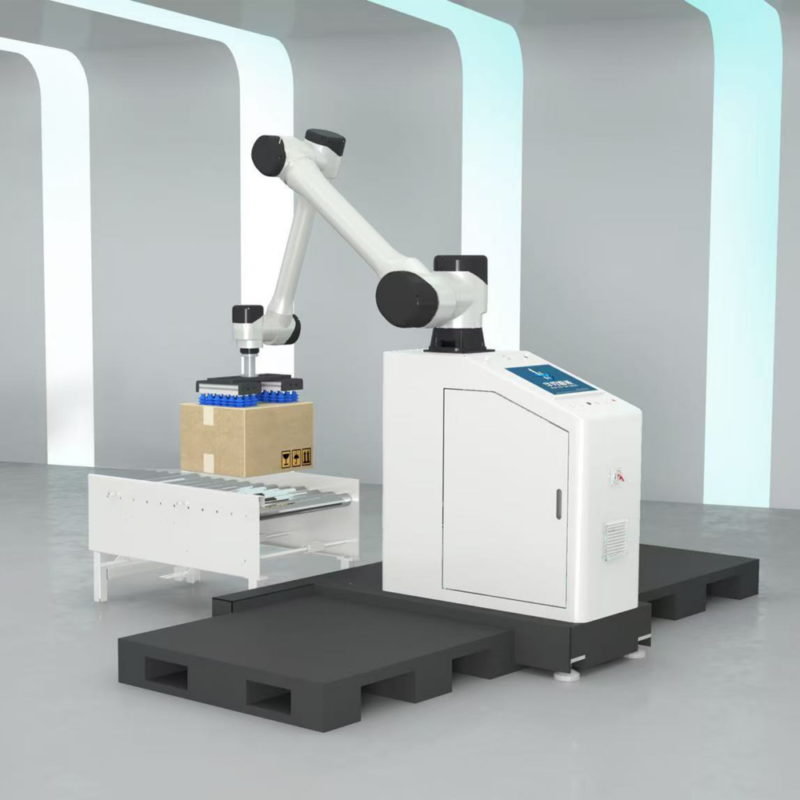
The MD—630 Portable Collaborative Robot Palletizer from Mystech Woods features a self-developed control system and program-free operation. Its visual touchscreen interface allows operators to generate palletizing patterns without programming knowledge.
For factories handling changing orders, this approach can make routine adjustments more accessible to production personnel. It may also reduce dependence on external programming support for supported pattern changes. The important point is to confirm which configurations the system supports and how quickly operators can switch between actual production tasks.

3. Check Payload Capacity and Working Range
Flexibility does not mean that every robot can handle every product. Payload capacity, working range, and the dimensions of the palletizing area all influence what a machine can do.
A robot must be capable of handling the combined load of the product and its end-of-arm tooling within the manufacturer’s specified limits. Its reach must also accommodate the required pickup position, stacking height, and pallet arrangement.
When comparing a robotic palletizing machine, manufacturers should check the rated payload, working envelope, permitted stacking height, and compatibility with the required gripper or handling tool.
The MD—630 is designed as a portable collaborative palletizing solution with a compact structure and high payload capacity. However, buyers should confirm its exact specifications against their product weights, carton dimensions, and planned pallet patterns before making a purchasing decision.
This step helps prevent a common mistake: choosing equipment based on flexibility alone without checking whether it can handle the actual production load.
4. Consider How the Robot Fits into Your Production Line
A palletizing robot rarely works in isolation. Its performance also depends on how products arrive at the palletizing station and how completed pallets are moved away.
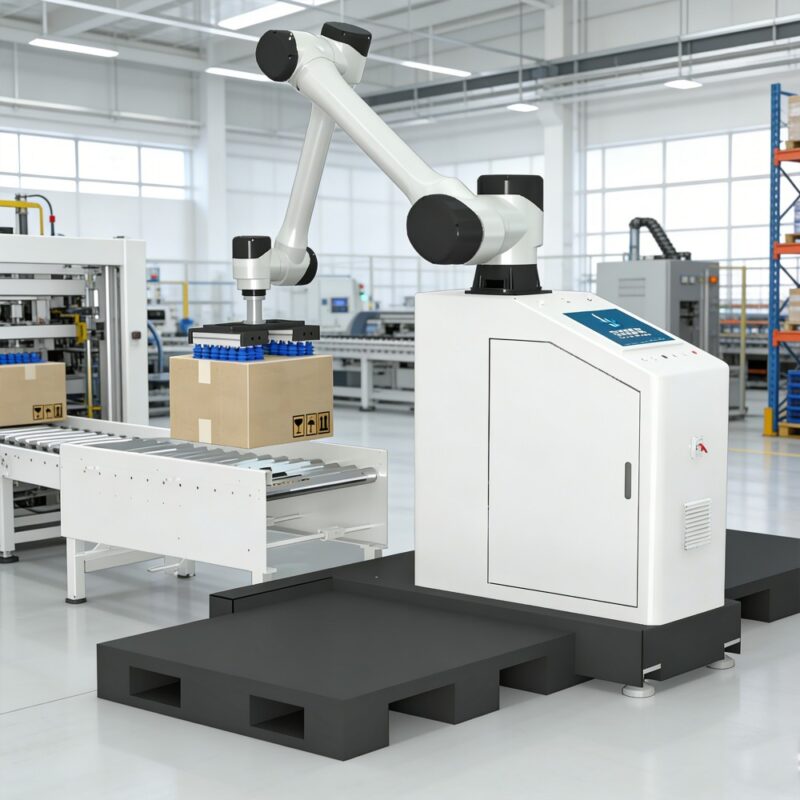
For some factories, an independently deployed robot may be sufficient. Others may benefit from integrating the equipment with an automatic pallet dispenser and pallet conveyor system to create a more continuous workflow.
An automatic palletizing system can help reduce manual handling at the end of a production line when its components are properly coordinated. For instance, a pallet dispenser can supply empty pallets, while a conveyor can move completed loads to the next stage of handling.
The MD—630 supports independent operation or integration with automatic pallet dispensers and pallet conveyor systems. This gives manufacturers options when planning a new production line or upgrading an existing one.
Before installation, assess the available floor space, product transfer method, pallet supply arrangement, and downstream material-handling process. Integration requirements should be confirmed with the supplier to ensure that the complete system operates as intended.
5. Balance Flexibility with Production Efficiency
A flexible robot is valuable only when it helps the factory complete its work efficiently. Frequent product changes, unnecessary operator intervention, and poorly planned layouts can reduce the benefits of automation.
Manufacturers should therefore look beyond the robot’s headline specifications and evaluate the entire palletizing process.
Useful questions include:
- How long does it take to switch between supported pallet patterns?
- Can operators manage routine changes with the touchscreen interface?
- Does the machine keep pace with the upstream production line?
- How much manual handling remains after palletizing?
- Can the equipment accommodate foreseeable changes in product mix?
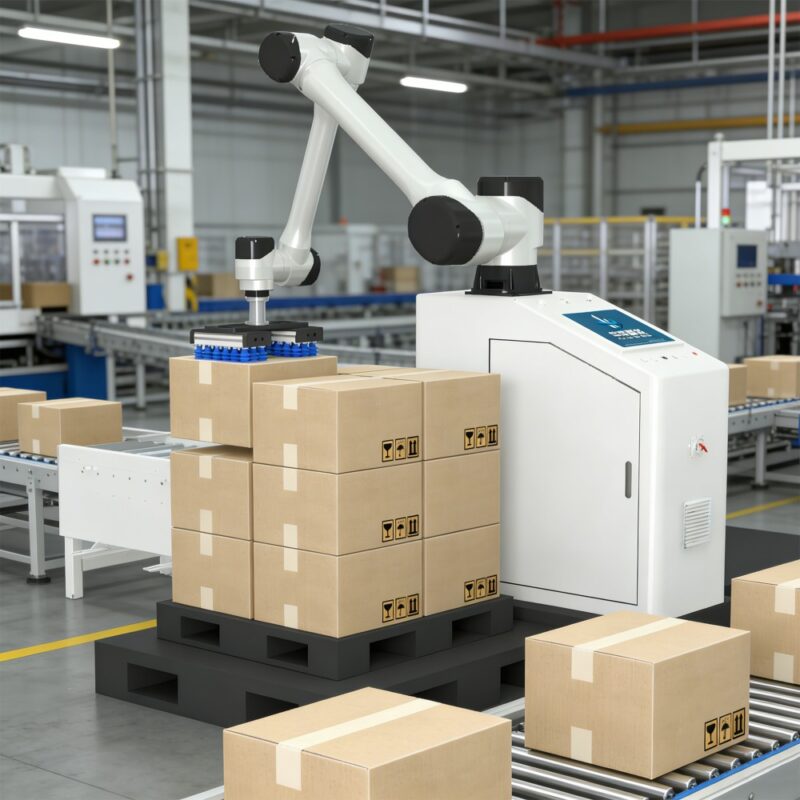
These questions are particularly relevant to factories supplying different customers or producing several product variants. A well-matched collaborative robotic palletizing system can provide greater operational flexibility, but actual productivity depends on the product, tooling, layout, and process requirements.
6. Choose a Solution That Fits Your Industry
Different industries have different palletizing needs. Food and beverage manufacturers may handle cartons in varying sizes, while pharmaceutical and cosmetics producers may manage multiple packaging formats. Daily necessities, metal products, and general carton packaging can also involve different load characteristics and stacking requirements.
A portable robotic palletizer may be worth considering when a factory needs a compact solution that can be deployed flexibly. However, portability alone does not guarantee suitability. Payload limits, product handling requirements, guarding, and the working environment must all be assessed.
Mystech Woods offers the MD—630 Portable Collaborative Robot Palletizer as a solution designed for a range of industrial applications. For manufacturers considering this type of equipment, discussing representative products, pallet dimensions, and target output with the supplier is a practical way to assess suitability.
Final Thoughts
Handling different palletizing tasks with one robot is possible when the equipment has the right combination of control flexibility, payload capacity, working range, and integration options.
For manufacturers dealing with changing product lines, the priority should be finding a palletizing solution that can accommodate supported task changes without making daily operations unnecessarily complicated. Program-free pattern configuration, a compact design, and compatibility with pallet handling equipment can all be useful features.
The MD—630 Portable Collaborative Robot Palletizer from Mystech Woods provides a starting point for evaluating this approach. By matching its specifications to actual production requirements and confirming performance with representative products, factories can make a more informed decision about whether one robotic palletizing solution can meet their different operational needs.