


Packaging looks simple from the outside, but anyone who has worked on a production floor knows that the last step can easily become a bottleneck. Products need to be wrapped neatly, sealed securely, and prepared for storage or transport. When the packaging volume increases, doing everything by hand quickly becomes inefficient.
At the same time, a fully automatic packaging line is not always the best answer. Many manufacturers run medium-volume production, handle several product sizes, or change packaging requirements from one order to the next. In these situations, a semi-automatic shrink wrapping machine can offer a more practical balance between machine efficiency and operator flexibility.
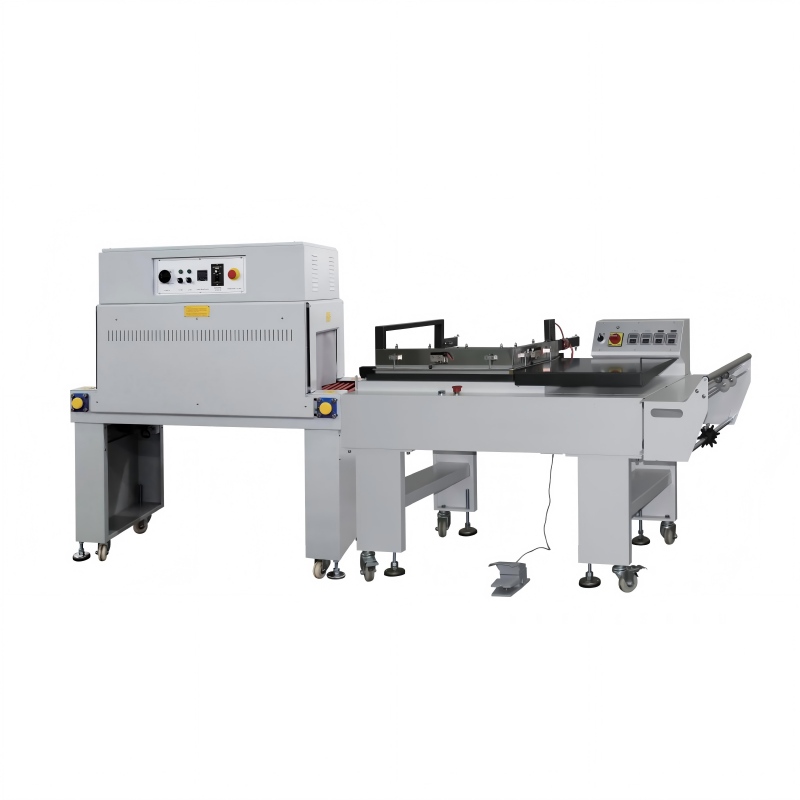
Mystech Woods develops packaging equipment for these kinds of production environments. The YS-SL-6045B is a pneumatic L-bar sealing machine designed for shrink film packaging. It uses a bottom sealing system and can work with a shrink tunnel to produce tight and professional packages across a wide range of products.
Where Does Semi-Automatic Shrink Wrapping Fit in a Production Line?
There is no single packaging setup that works for every manufacturer. A company producing thousands of identical products every day may benefit from a fully automated line. Another company may produce several product models in smaller batches. For the second type of operation, having an operator manually position the product while the machine handles sealing can actually make the workflow easier to manage.
This is where semi-automatic packaging equipment has its place. The operator remains responsible for loading and positioning the product. The machine takes care of the sealing process, helping create more consistent results than manual sealing alone.
After sealing, the package can move into a shrink tunnel, where controlled heat contracts the film around the product. The two machines work together to complete the shrink packaging process.
Product placement → Film sealing → Shrink tunnel → Finished package
It is a straightforward workflow, but it can make a noticeable difference when a business handles packaging throughout the working day.
The Role of the Pneumatic L-Bar Sealing System
The sealing stage is one of the most important parts of shrink film packaging. The YS-SL-6045B uses a pneumatic L-bar sealing structure. The L-shaped sealing bar closes the film around the product and creates a clean sealed edge. Pneumatic operation helps maintain consistent movement during repeated cycles. For operators, this means they do not have to rely entirely on manual force to complete each seal. That consistency matters when packaging dozens or hundreds of products in a shift. A stable sealing process can also make it easier to maintain a uniform appearance across different batches. The bottom sealing design is another practical part of the machine. It supports the packaging process while keeping the equipment suitable for different product types and production conditions.
Why Use a Shrink Tunnel After Sealing?
Sealing the film is only half of the job. After the L-bar sealer closes the film, the material may still look loose around the product. The shrink tunnel provides the heat needed to make the film contract. As the package passes through the tunnel, the film shrinks around the product and creates a tighter fit. The final package looks cleaner and is easier to handle. This is particularly useful for retail products where appearance matters. It can also help keep grouped products together during transportation and storage. For businesses already using shrink film, combining an L-bar sealing machine with a suitable shrink tunnel can create a simple but effective packaging setup without the complexity of a large automated line.
One Machine, Many Product Categories
Another reason manufacturers choose shrink film packaging is its versatility. The same basic packaging process can work with very different products, provided that the product dimensions and film specifications match the equipment.
The YS-SL-6045B is suitable for applications in several industries.
Food and Beverage
Food products and beverage-related packaging often need a clean outer finish. Shrink film can provide a neat package for suitable secondary packaging applications. For grouped products, the film can also help keep items together during handling and transportation.
Cosmetics
Cosmetic packaging is often closely tied to product presentation. A clean, tight film layer can give the package a more finished appearance while adding an additional layer of protection during distribution.
Pharmaceuticals
Pharmaceutical packaging has strict requirements, so the equipment and film need to match the specific application. For suitable secondary packaging processes, shrink film can provide an additional protective layer around packaged products.
Electronics
Electronic products and accessories can benefit from sealed outer packaging that helps keep dust and handling away from the product surface.
Stationery and Consumer Goods
Books, notebooks, office supplies, household products, and other daily consumer goods are also common candidates for shrink film packaging. The important point is not simply whether a product can be shrink wrapped. Manufacturers also need to consider its dimensions, shape, material, production volume, and final packaging requirements.

What Makes Semi-Automatic Equipment Useful for Medium-Volume Production?
For many businesses, production volume falls somewhere between small-batch manual work and high-speed automated manufacturing. That middle ground is where a semi-automatic shrink wrapping machine becomes particularly useful. The operator can adjust the workflow from one product to another without completely changing the production line. This is helpful for businesses with multiple SKUs or seasonal changes in demand. There is also less pressure to automate every step. The machine handles the repetitive sealing operation, while workers retain control over product placement.
For a growing manufacturer, this can be a sensible way to improve packaging efficiency without making a major investment in a fully automated system.
Packaging Flexibility Matters More Than Maximum Speed
When buying packaging equipment, production speed is often the first number people look at.
In practice, speed is only one part of the equation.
If a machine runs quickly but requires frequent adjustments, complicated maintenance, or long changeover times, the actual production output may not be as impressive as the specification suggests.
For medium-volume operations, flexibility can be more valuable.
A shrink film packaging machine should fit naturally into the existing workflow. Operators should be able to load different products, make routine adjustments, and continue production without unnecessary downtime. This is one of the reasons semi-automatic systems remain relevant even as packaging automation continues to develop.
Maintenance Should Be Part of the Buying Decision
Packaging equipment works in a repetitive environment. Sealing components, pneumatic systems, heating elements, and other parts are used again and again. Over time, even a reliable machine will require inspection and maintenance. A practical machine design makes this work easier for the production team. Regular cleaning, inspection of sealing components, checking pneumatic connections, and following the manufacturer’s maintenance recommendations can help keep the equipment running properly.
The YS-SL-6045B is designed with stable operation and straightforward maintenance in mind. For businesses that do not have a large technical maintenance team, this can be an important consideration.
What Should Buyers Check Before Choosing a Shrink Wrapping Machine?
There are several questions worth answering before making a purchase.
What products will the machine package?
Start with product dimensions, weight, shape, and surface characteristics.
What is the expected production volume?
A medium-volume operation may not need the same level of automation as a high-speed factory.
What type of shrink film will be used?
Film type and thickness can affect sealing and shrinking performance.
Will the machine work with a shrink tunnel?
If the final package needs a tight appearance, the sealing machine and tunnel should work as a suitable combination.
How much flexibility does the production team need?
Businesses handling multiple products may benefit from a semi-automatic setup that allows operators to make quick adjustments.
These questions usually provide a better starting point than simply comparing machines by maximum speed.
A Practical Packaging Solution from Mystech Woods
Mystech Woods focuses on packaging equipment designed around real production requirements.
The YS-SL-6045B combines pneumatic L-bar sealing with a bottom sealing system for shrink film packaging. When paired with a shrink tunnel, it can complete the process from film sealing to final shrink wrapping.
Its application range covers food, beverages, cosmetics, pharmaceuticals, electronics, stationery, and daily consumer goods. More importantly, the machine is designed for businesses that need a dependable packaging process without moving immediately to a fully automated production line.
Final Thoughts
A modern packaging line does not always need to be fully automated to be efficient. For medium-volume manufacturers, a semi-automatic shrink wrapping machine can provide a useful combination of operator control, consistent sealing, and packaging flexibility. The pneumatic L-bar sealing system handles the repetitive sealing work, while the shrink tunnel completes the package by tightening the film around the product. For businesses handling multiple products or changing production volumes, that balance can be more useful than simply pursuing the highest possible packaging speed.
Mystech Woods continues to develop practical packaging equipment for manufacturers looking for stable operation, flexible applications, and manageable production processes.