


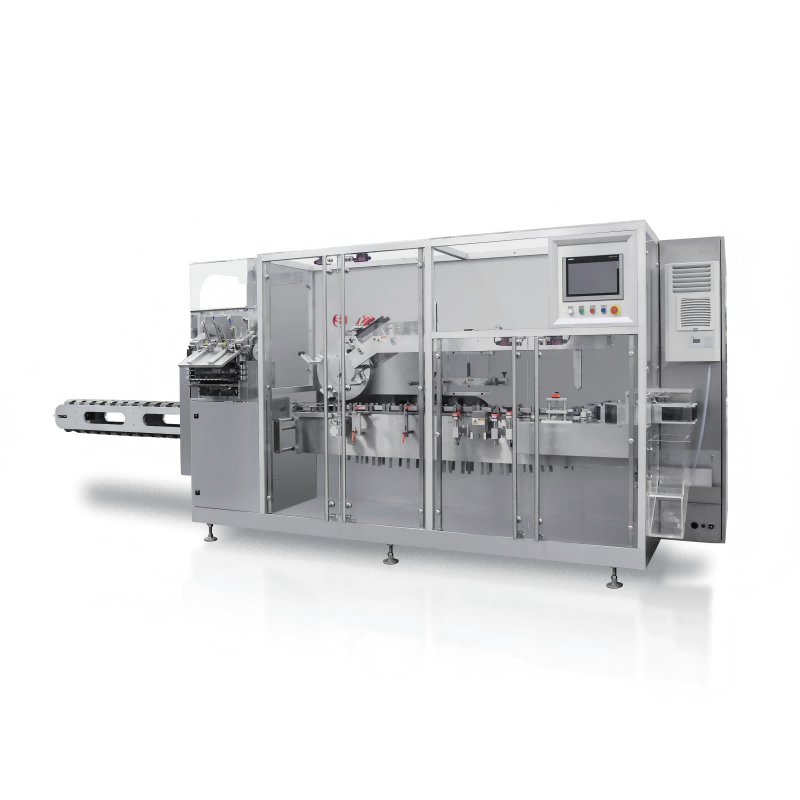
For many manufacturers, moving to an automated packaging line is not a decision made overnight. A production line may start with manual carton packing and work well for a small order volume. As production grows, however, labor costs, packaging speed, and consistency can become harder to control.
This is where a full automatic cartoning machine can make a real difference. But automation only makes sense when the equipment matches the actual production needs. Product type, carton size, output requirements, available labor, and the rest of the packaging line all need to be considered.
For pharmaceutical, food, cosmetics, and consumer goods manufacturers, the goal is not simply to buy a faster machine. The goal is to build a packaging process that can run reliably day after day.
Start With Your Production Volume
Production volume is usually the first thing manufacturers look at. Manual cartoning can be practical when production is small or orders change frequently. Once output reaches a certain level, repetitive carton forming, product insertion, and sealing can take up a significant amount of labor. The problem becomes more obvious when production needs to run for several shifts or meet tight delivery schedules.
An máquina estuchadora automática can handle these repetitive operations in a more consistent way. It automatically coordinates product feeding, carton forming, product inserting, carton sealing, and product output.
| Production Situation | Manual Packing | Automatic Cartoning |
|---|---|---|
| Small batches | Often practical | May not be necessary |
| Growing production | More labor required | Better scalability |
| High-volume orders | Difficult to maintain speed | More suitable |
| Long production runs | Output may vary | More consistent |
| Labor-intensive packing | Higher staffing needs | Reduced manual work |
The right point to automate depends on the individual factory. There is no single production volume that applies to every business.
When Labor Starts Affecting Production
Labor is another practical reason to consider automation. Cartoning includes many repetitive actions. Workers need to pick products, open cartons, place products inside, close the cartons, and move finished packages to the next process. Over a long production run, maintaining the same speed and accuracy can be difficult. A full automatic cartoning machine takes over much of this repetitive work. Operators can spend more time on material preparation, machine monitoring, inspección de calidad, and production management. This does not mean that automation eliminates the need for people. Instead, it changes where people are needed on the production line. For manufacturers facing labor shortages or rising operating costs, this can be an important reason to upgrade the packaging process.
Product and Carton Compatibility Still Come First
A common mistake is to focus on machine speed before checking whether the equipment actually fits the product.
Different products require different feeding methods. Cartons can also vary in length, width, height, material, and opening design. A packaging machine needs to handle these differences without creating frequent jams or adjustment problems.
The YCZ-300 is designed for different product types and carton sizes. Its configuration can be adjusted according to specific packaging requirements, making it suitable for a range of industrial applications.
Before selecting an automatic packaging machine, manufacturers should confirm several basic points:
- Product dimensions and weight
- Carton size and material
- Required production speed
- Product feeding method
- Carton forming requirements
- Sealing method
- Available installation space
- Connection with upstream and downstream equipment
These details may seem basic, but they often determine whether a machine works smoothly after installation.

Consistency Matters More as Output Grows
Speed is easy to measure. Packaging consistency is sometimes more difficult to quantify, but it matters just as much.
When products are packed manually, small differences can appear from one operator to another. Cartons may not be opened in exactly the same way. Products may sit at slightly different positions. Sealing quality can also vary.
An automated cartoning system provides more controlled movement throughout the process. The product is fed into the carton according to a defined sequence, while carton forming and sealing follow the machine’s programmed operation.
For industries such as pharmaceuticals and cosmetics, this level of consistency is particularly useful. A stable packaging process can help reduce rejected cartons, unnecessary rework, and material waste.
Automation Should Fit the Whole Production Line
A cartoning machine does not usually work alone.
In a modern packaging line, it may need to connect with conveyors, product feeding systems, labeling equipment, coding machines, inspection systems, or other packaging equipment. If the machines do not work at compatible speeds, the cartoning process can become a bottleneck.
This is why line integration should be discussed before the machine is ordered.
An experienced cartoning machine manufacturer should understand how the equipment will operate within the customer’s existing production line. Machine configuration, product feeding, carton specifications, control systems, and output requirements can all affect the final solution.
A machine that looks suitable on paper may still need adjustments once it is connected to the complete line.
What About Different Products and Future Orders?
Production requirements rarely stay exactly the same.
A manufacturer may currently produce one carton size but add another product next year. A brand may also introduce different package sizes for different markets. If the machine is too specialized, these changes can become expensive.
For this reason, flexibility is worth considering when purchasing a full automatic cartoning machine.
The goal is not to make one machine handle every possible product. That is rarely practical. Instead, manufacturers should consider whether the equipment has enough adjustment range for the products they are likely to produce.
A flexible machine can make future production changes easier without requiring a completely new packaging system.
When Does OEM Packaging Equipment Make Sense?
Standard equipment works well for many applications. However, some production lines have requirements that cannot be solved with an off-the-shelf configuration.
This is where OEM packaging equipment becomes useful.
Customization may involve product feeding, carton dimensions, machine configuration, control systems, production speed, or integration with other equipment. The exact scope depends on the product and production environment.
For a manufacturer planning a new automated line, discussing these requirements with the equipment supplier at an early stage can save time later.
A Practical Approach
Instead of asking only:
“How fast can the machine run?”
It is better to ask:
“How should the machine fit into our complete packaging process?”
That second question usually leads to a more suitable solution.
Choosing the Right Cartoning Machine Manufacturer
The equipment supplier can have a major impact on the long-term performance of the packaging line.
When comparing a cartoning machine manufacturer or supplier, buyers should look at more than the machine specification sheet. Engineering support, customization capabilities, machine stability, adjustment convenience, and after-sales service are all important.
A reliable supplier should also be able to understand the customer’s actual packaging process.
For example, Mystech Woods provides packaging solutions for pharmaceutical, food, cosmetics, and consumer goods applications. Its experience with automated packaging equipment allows customers to discuss product requirements, carton specifications, and production line integration before finalizing the machine configuration.
YCZ-300: Designed for Automated Cartoning
The YCZ-300 automatic cartoning machine is designed to automate several key stages of the packaging process.
Main processes include:
Product Feeding → Carton Forming → Product Inserting → Carton Sealing → Output
The machine combines these operations into a continuous automated workflow. Its durable structure and controlled operation support stable production, while the adjustable configuration allows it to work with different products and carton sizes. As an automatic packaging machine, the YCZ-300 is suitable for manufacturers looking to reduce repetitive manual work and improve packaging efficiency.
For companies with specific requirements, Mystech Woods also provides customized OEM packaging equipment solutions. This can include machine configuration and integration with the customer’s existing production line.
Is Full Automation Right for Your Production Line?
A full automatic cartoning machine makes the most sense when manual packing is becoming a bottleneck rather than simply because automation is available.
It may be the right time to consider one when:
- Production volume is increasing
- Manual packing requires too many operators
- Packaging quality varies between shifts
- Labor availability is becoming a problem
- Orders require more consistent output
- Multiple products need flexible carton packaging
- The existing line is ready for further automation
The investment should always be considered in the context of the entire production process. Machine speed is important, but reliability, product compatibility, maintenance, flexibility, and line integration often have a greater impact on long-term value.
For manufacturers planning to move from manual or semi-automatic packing to a more automated process, choosing the right equipment and the right cartoning machine manufacturer can make the transition much smoother.
Building a More Efficient Packaging Process
Automation is not simply about replacing a manual operation with a machine. Good packaging automation connects several processes and makes the entire workflow easier to control. A well-designed full automatic cartoning machine can reduce repetitive labor, improve packaging consistency, and support higher production efficiency. More importantly, it gives manufacturers a more stable foundation for future production growth. With the YCZ-300 and customized packaging solutions, Mystech Woods helps businesses move toward a more efficient and reliable automated packaging process.