


In plastic bottle packaging, filling and sealing are closely connected operations. A bottle must receive the required amount of product before it moves to the sealing stage. If these two processes are not properly coordinated, production may experience inconsistent filling, delayed bottle transfer, or interruptions along the packaging line. For manufacturers handling medium- and large-scale orders, maintaining a stable connection between the two stages is an important part of production management.
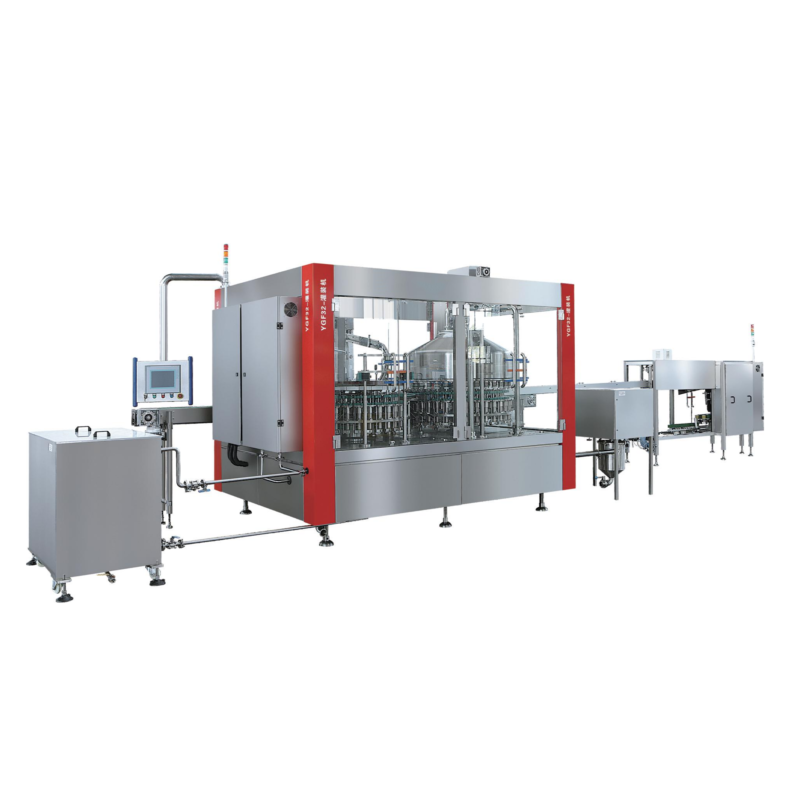
An Automatic Rotary Filling & Sealing Machine for Plastic Bottles brings these operations together in one automated system. Instead of treating filling and sealing as two completely separate processes, the rotary design allows bottles to move through the required processing stages within the same machine. This arrangement helps reduce manual handling and supports more consistent packaging operations.
1. Why Do Filling and Sealing Need to Work Together?
Filling and sealing may appear to be independent operations, but their performance is directly related. Once a bottle has been filled, it needs to reach the sealing station at the appropriate time and in the correct position. Any delay or inconsistency during this transfer can affect the overall production rhythm.
For example, if the filling process runs faster than the sealing stage can handle, filled bottles may accumulate between operations. On the other hand, if the sealing process is not properly coordinated with bottle feeding and filling, the equipment may not maintain a smooth operating cycle.
This is why manufacturers increasingly consider integrated bottle filling and sealing equipment rather than evaluating filling capacity alone. The objective is not simply to increase the speed of one operation, but to ensure that each stage can work as part of a coordinated packaging process.
2. How Does a Rotary Structure Connect the Two Processes?
The rotary design is central to how an automatic rotary filling sealing machine coordinates different operations. Bottles are transferred through the machine’s processing positions as the rotary system operates. Filling and sealing are arranged as connected stages within the same equipment.
After a bottle reaches the filling position, the machine performs the filling operation according to its configured requirements. The bottle then moves to the subsequent sealing stage, where the packaging process continues.
This integrated arrangement offers several practical benefits:
- Continuous bottle movement: The rotary structure supports the transfer of bottles between processing stages.
- Reduced manual handling: Filling and sealing can be completed within one automated system, reducing the need for separate manual transfers.
- Coordinated operation: The two processes are arranged to work within a shared production cycle.
- More organized production: Combining operations can simplify the packaging workflow and reduce unnecessary movement between separate machines.
For manufacturers looking to improve their packaging arrangements, this structure provides a practical way to connect two essential operations.
3. What Determines Synchronization During Production?
Integrating filling and sealing into one machine does not automatically guarantee consistent performance. Several operating factors influence how well the processes work together.
Bottle positioning
Bottles need to remain properly positioned as they move through the machine. Accurate positioning helps ensure that each container reaches the required processing station in a suitable condition. It is particularly relevant when handling different plastic bottle sizes.
Filling volume
The filling system needs to deliver the configured volume consistently. Differences in filling requirements can affect production settings, so the selected machine should be suitable for the products and filling volumes involved.
Processing speed
Filling and sealing must operate within a compatible production cycle. Increasing the speed of one stage without considering the other may create a bottleneck rather than improve total output.
Bottle transfer
The movement from filling to sealing is another important part of the process. Stable transfer helps maintain the production sequence and reduces unnecessary interruptions.
These factors should be considered together when evaluating a plastic bottle filling and sealing machine. Overall performance depends on how the complete system operates, not just the specifications of an individual function.

4. How Does Integrated Equipment Support Production Efficiency?
Using separate machines for filling and sealing may require additional transfer arrangements, operating space, and coordination between different pieces of equipment. An integrated rotary system brings the two processes into one machine, creating a more connected workflow.
For medium- and large-scale production, this arrangement can help reduce manual intervention and simplify daily operation. Operators can manage filling and sealing as parts of the same equipment rather than coordinating two entirely separate production stages.
Another consideration is filling accuracy. Consistent filling volumes are important for product presentation, packaging requirements, and material control. By integrating the filling operation into an automated system, manufacturers can manage the process according to the machine’s configured filling requirements.
The actual improvement in output depends on factors such as bottle specifications, filling volume, product characteristics, operating settings, and production conditions. Therefore, machine capacity should always be evaluated against the requirements of the intended application.
5. Can One Machine Handle Different Plastic Bottle Sizes?
Bottle specifications often vary between products and packaging programs. A manufacturer may need to process containers with different dimensions or filling volumes, particularly when serving multiple product lines.
The rotary filling and sealing solution described by Mystech Woods supports various plastic bottle sizes and filling volumes. This flexibility makes it relevant to manufacturers who need equipment for more than one packaging specification.
However, compatibility should be confirmed before selecting the machine. Bottle dimensions, container structure, filling requirements, and sealing specifications all influence whether a particular configuration is suitable. Buyers should provide representative bottle samples and detailed product requirements when discussing equipment selection.
For an automatic filling machine supplier, understanding these application details is essential to recommending an appropriate configuration rather than relying on general equipment descriptions.
6. What Should Manufacturers Evaluate Before Choosing an Integrated Machine?
Before investing in an automatic rotary filling sealing machine, manufacturers should examine the complete packaging process.
Start with the product itself. Different liquids and filling materials may have different handling requirements, which should be considered when confirming the machine configuration.
Next, review the bottle specifications and required filling volumes. The equipment should be compatible with the actual containers used in production, rather than only with standard sample bottles.
It is also important to assess the required production output. A machine designed for medium- or large-scale operations should be evaluated according to the expected production schedule and the coordination between filling and sealing.
Finally, consider operation and maintenance. A durable structure and user-friendly operation can support routine production management, while accessible technical support and clear equipment documentation are useful when introducing new machinery into an existing facility.
7. An Integrated Approach to Bottle Packaging
Synchronizing filling and sealing is not simply a matter of placing two functions inside one machine. It requires the bottle transfer, filling operation, sealing stage, and production cycle to work together as a coordinated system.
An Automatic Rotary Filling & Sealing Machine for Plastic Bottles offers manufacturers an integrated approach to these operations. Its rotary design connects filling and sealing within one automated system, helping reduce manual handling and support stable packaging performance across different bottle sizes and filling volumes.
At Mystech Woods, we provide advanced packaging solutions designed around production efficiency, filling accuracy, and sealing reliability. For manufacturers planning to improve their bottle packaging operations, selecting equipment based on actual bottle specifications, filling requirements, and production capacity is a practical starting point.