


Not every product can be packaged in the same way. A small box of accessories, a bundle of printed materials, and a large household product all have different packaging requirements. Some need a tight film finish, while others require more space around the product or additional protection during handling.
For manufacturers and packaging businesses, a semi-automatic shrink wrapping machine offers a practical way to handle different products without relying entirely on manual packaging. However, the range of products it can process depends on the machine configuration, sealing area, film type, and shrink tunnel capacity.
So, what products are suitable for this type of equipment?
1. Boxed Products and Retail Packaging
Cardboard boxes are among the most common products handled by a semi-automatic shrink wrapping machine. Products such as cosmetics, electronics accessories, stationery, toys, and small household goods are often packed in individual cartons before being wrapped in shrink film.
The film forms a close-fitting layer around the box after heating. This helps keep the outer packaging together and gives the finished product a neat appearance.
For retail packaging, shrink wrapping can also help protect cartons from dust, surface scratches, and minor handling contact during storage and transportation.
When processing boxed products, several details deserve attention:
- Box dimensions: The product must fit within the machine’s sealing and shrinking capacity.
- Carton strength: Lightweight cartons should be able to withstand the wrapping and heating process.
- Film selection: Film thickness and shrink characteristics should match the product size and packaging requirements.
- Sealing quality: Consistent seals help prevent the film from opening during handling.
For businesses packaging multiple carton sizes, adjustable machine settings can make product changeovers more convenient.
2. Books, Printed Materials, and Paper Products
Books, magazines, notebooks, catalogs, and other printed materials are also suitable applications for shrink wrapping equipment.
These products are often packaged individually or in small bundles. Shrink film can hold the items together while providing a protective outer layer against dust and everyday handling.
For example, a publisher may use shrink wrapping to package a book before distribution, while a stationery manufacturer may wrap several notebooks together as one retail unit.
However, paper-based products need appropriate temperature control. Excessive heat may affect certain printed surfaces, coatings, adhesives, or packaging materials. The shrink temperature and processing time should therefore be tested with the actual product before regular production.
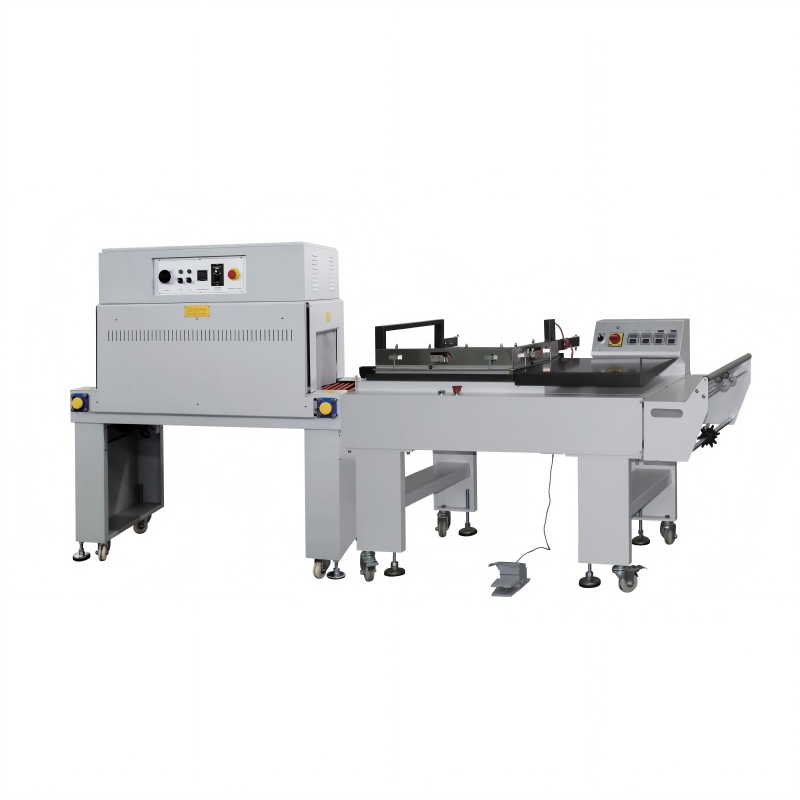
3. Consumer Goods and Household Products
Many consumer goods have shapes and packaging requirements that make shrink wrapping useful. Examples include kitchen accessories, household cleaning products, small appliances, plastic containers, and personal care items.
A semi-automatic shrink wrapping machine can be used to wrap these products individually or prepare grouped items for retail sale.
For products sold in sets, shrink film can keep multiple units together without requiring a separate outer carton in every application. This can be useful for promotional packs, bundled products, and multipacks.
The main consideration is product stability. Items with uneven surfaces, protruding parts, or loose components may need to be arranged carefully before sealing. Products containing heat-sensitive materials also require testing to determine whether the shrinking process is suitable.

4. Bottles, Cans, and Multipack Products
Beverage containers, bottled products, cans, and other cylindrical packages are frequently sold in groups. Shrink film can hold several containers together, making the pack easier to handle and display.
For example, manufacturers may wrap multiple bottles or cans into a single sales unit. Similar packaging methods are used for household liquids and other container-based products.
The machine configuration matters here. A product group needs to fit within the sealing area, and the film must be able to surround the complete bundle without leaving an unsuitable opening.
For heavier multipacks, the strength and thickness of the selected film should also be considered. The packaging should be tested under realistic lifting and transportation conditions rather than judged by appearance alone.
5. Irregularly Shaped Products
Not all products come in standard rectangular boxes. Toys, plastic components, hardware accessories, promotional items, and other irregularly shaped goods may also be considered for shrink wrapping.
However, these applications require more careful assessment.
Sharp edges can puncture the film, while uneven product surfaces may result in loose or inconsistent wrapping. Products with delicate protrusions may need additional positioning or protective packaging before entering the machine.
In some cases, a custom fixture or a different packaging arrangement may be necessary. The important point is that a semi-automatic shrink wrapping machine should be selected according to the actual product dimensions and shape, not simply the product category.
Product Types and Their Shrink Wrapping Considerations
| Product Type | Typical Application | Main Consideration |
|---|---|---|
| Cardboard boxes | Kosmetika, electronics accessories, toys | Box dimensions and film finish |
| Books and magazines | Individual or bundled packaging | Temperature control |
| Household goods | Kitchen accessories, small appliances | Product stability and heat sensitivity |
| Bottles and cans | Multipacks and promotional bundles | Bundle arrangement and film strength |
| Plastic components | Accessories and small parts | Sharp edges and irregular shapes |
| Promotional sets | Gift packs and product combinations | Product positioning and sealing area |
6. How to Determine Whether a Product Is Suitable
Before purchasing a semi-automatic shrink wrapping machine, manufacturers should evaluate the products they intend to package. Two products with similar dimensions may require different packaging configurations because of their materials, weight, or surface characteristics.
Here are four practical points to check.
Product dimensions and weight
Measure the maximum product length, width, and height, including any protruding parts. These measurements help determine whether the product can fit through the machine’s working area and shrink tunnel.
Film compatibility
Common shrink films include POF, PE, and PVC. They differ in flexibility, thickness, shrink behavior, and typical applications. The appropriate film depends on the product, packaging requirements, and machine configuration.
Heat sensitivity
Products containing heat-sensitive materials, certain coatings, adhesives, or electronic components may require additional testing. The actual product should be tested under the intended shrinking conditions.
Production volume
A semi-automatic machine still requires operator involvement, such as positioning products and handling the sealing process. Manufacturers should consider the expected packaging volume and available labor when evaluating whether this equipment fits their production workflow.

7. Why Consider a Semi-Automatic Shrink Wrapping Machine?
For businesses that package several product types, a semi-automatic shrink wrapping machine can provide a practical balance between manual operation and automated processing.
Operators generally handle product placement and parts of the packaging cycle, while the machine performs the relevant sealing and shrinking operations according to its configuration.
This arrangement can be useful for small and medium-sized production facilities, businesses with changing product lines, and packaging operations that do not require a fully automated production line.
At Mystech Woods, understanding the product being packaged is an important starting point when evaluating shrink wrapping equipment. Machine selection should take into account product dimensions, packaging materials, production requirements, and the intended application.
Rather than choosing equipment based on a general product category, manufacturers should provide actual product samples or detailed measurements when discussing machine suitability.
Final Thoughts
A semi-automatic shrink wrapping machine can handle a wide range of products, including boxed goods, printed materials, household items, bottles, cans, and selected irregularly shaped products.
However, suitability depends on more than the product name. Dimensions, weight, surface shape, film compatibility, and heat resistance all influence the packaging result.
For manufacturers considering shrink wrapping equipment, evaluating the actual products and testing the packaging process are essential steps toward selecting a suitable machine for daily production.