


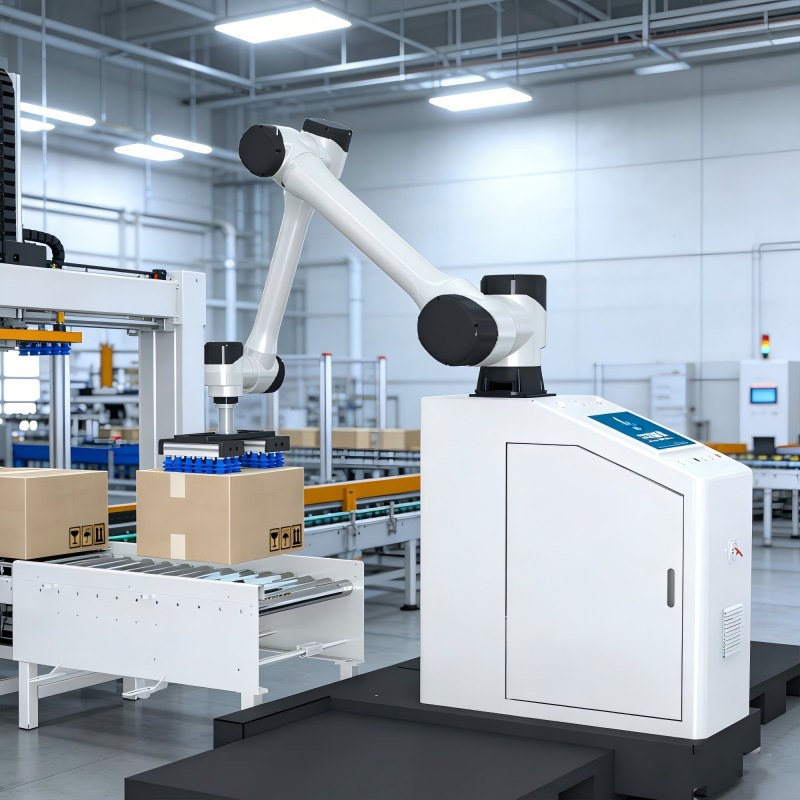
Manufacturers often need to palletize different products across several production lines. Installing a dedicated robot at every workstation can increase equipment costs and occupy valuable floor space. A portable palletizing robot offers another option. It allows manufacturers to move palletizing capacity between suitable workstations as production needs change.
However, sharing one robot requires more than mobility. Manufacturers must consider production speed, product compatibility, changeover time, and material flow. With the right setup, one robot can support multiple lines and improve equipment utilization. The Mystech Woods MD-630 offers a flexible approach to palletizing automation through compact design, touchscreen operation, and adaptable deployment.
How Can One Palletizing Robot Serve Multiple Production Lines?
A portable palletizing robot can handle different production lines in sequence. Operators move the system to a designated workstation and select the appropriate palletizing pattern. The robot then handles the assigned palletizing task.
Consider a factory that packs food products, household goods, and cosmetics on separate lines. Each line may follow a different production schedule. If their palletizing demand does not overlap significantly, one robot may serve all three areas at different times.
This arrangement can reduce the need for separate palletizers. It can also help manufacturers allocate equipment according to daily production priorities.
However, one robot cannot palletize products on several lines simultaneously. Manufacturers must compare each line’s output with the robot’s working capacity. If multiple lines require palletizing at the same time, a shared system may create delays.

What Makes a Portable Palletizing Robot Suitable for Multiple Lines?
Flexible Deployment Between Workstations
A portable palletizing robot gives manufacturers more flexibility when production layouts or priorities change. Instead of keeping the equipment in one fixed location, operators can move it between suitable workstations.
This approach can benefit factories with limited floor space or several packaging areas. It may also suit manufacturers that handle different products in separate production runs.
Before moving the robot, manufacturers should check floor conditions, access routes, power connections, and safety requirements. They should also account for the time needed to position and prepare the equipment at each station. Frequent relocation only adds value when the process remains practical and efficient.
Faster Palletizing Pattern Changes
Different production lines often use different carton sizes, stacking arrangements, and pallet configurations. Complex reprogramming can make frequent product changes time-consuming.
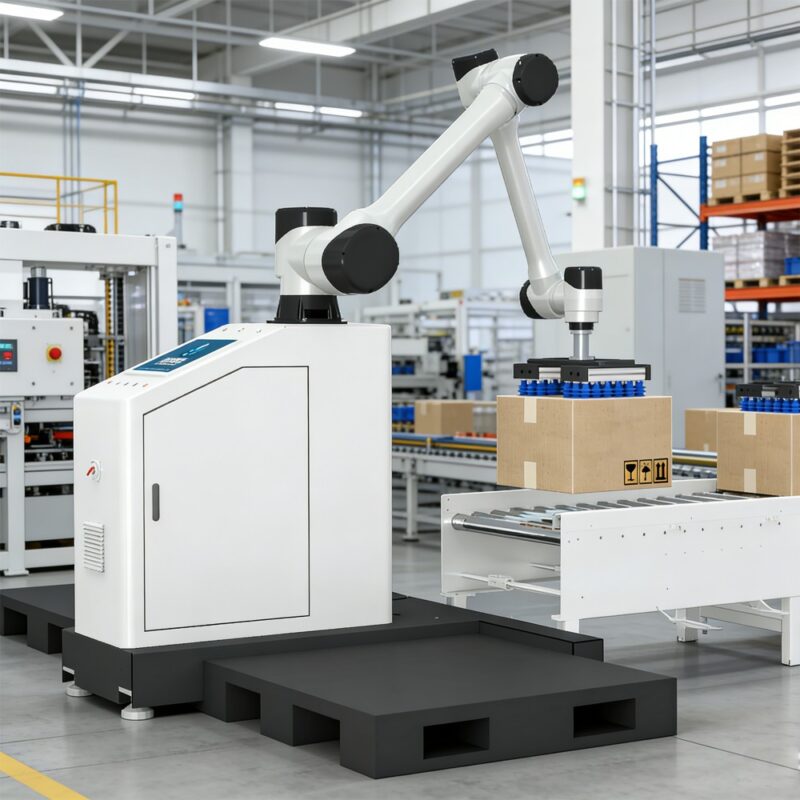
The Mystech Woods MD-630 features a self-developed control system and program-free operation. Operators can create palletizing patterns through a visual touchscreen interface. They do not need programming knowledge to complete this process.
This design helps simplify routine changes between palletizing tasks. It can also make operation more accessible to production staff. Actual changeover time depends on the product, stacking pattern, gripping method, and workstation setup.
Compact Design and High Payload Capacity
Floor space and load requirements both affect palletizing system selection. A compact robot can fit into a smaller production area. Sufficient payload capacity helps it handle the products assigned to each line.
The MD-630 combines a compact structure with high payload capacity. Manufacturers can assess its suitability by comparing its specifications with their product weights, carton dimensions, pallet heights, and required reach.
They should also check whether one end-of-arm tool can handle every product type. Different cartons or packages may require different gripping arrangements. These details help determine whether one robot can support the entire operation.
When Does Shared Palletizing Make Sense?
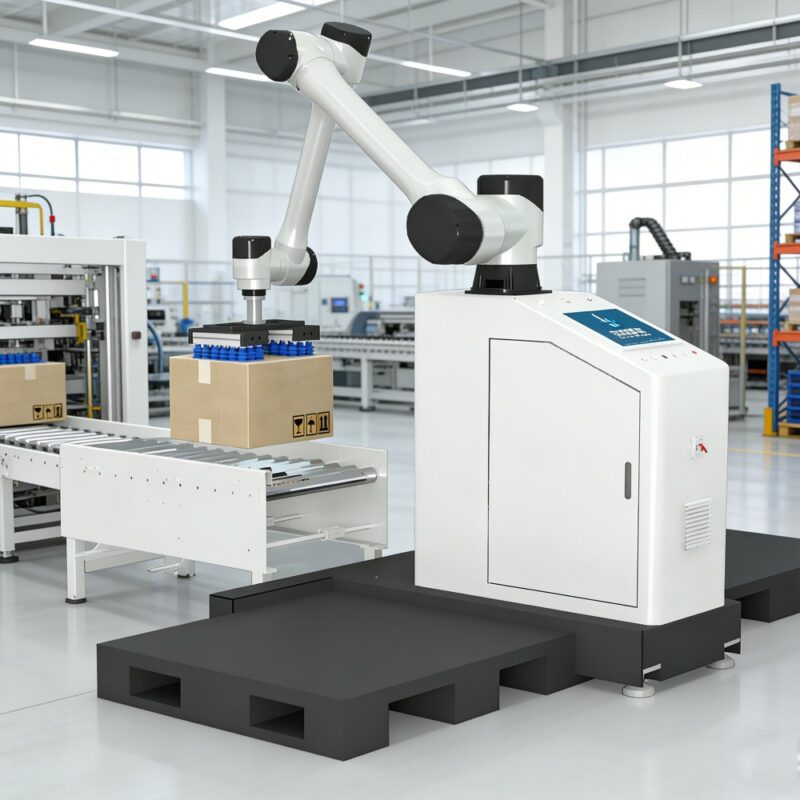
A shared robotic palletizer for multiple production lines works best when production schedules leave enough time for each task. Compatible products and manageable changeovers also make sharing more practical.
For example, a factory may run one product in the morning and another in the afternoon. A portable robot can serve the first line, then move to the second when production changes. This arrangement can reduce duplicated equipment and improve utilization.
The same approach may benefit manufacturers with seasonal demand or frequent product changes. A shared robot gives them another way to allocate automation resources as workloads fluctuate.
However, factories should avoid sharing equipment simply to reduce initial investment. If several lines run continuously at high speed, one robot may struggle to keep up. Cartons could accumulate, and upstream packaging operations might have to slow down.
In such cases, dedicated palletizing robots may offer better support for continuous production. Manufacturers can also combine dedicated systems on high-output lines with a portable unit for lower-volume workstations.
What Should Manufacturers Check Before Sharing a Palletizing Robot?
Before choosing a flexible palletizing automation solution, manufacturers should evaluate the full production workflow. The following factors help determine whether one robot can serve several lines effectively.
Production speed and workload: Calculate each line’s output, palletizing cycle time, and daily operating hours. Include pallet changes and planned downtime. The robot needs enough available time to handle the combined workload without disrupting production.
Product and pallet compatibility: Compare carton sizes, package weights, pallet dimensions, and stacking patterns. Confirm that the robot can handle each product safely and consistently. Check whether different products require separate gripping tools.
Relocation and changeover time: Estimate how long operators need to move the robot, position it, and prepare the next task. Frequent changes may reduce available production time. A clear operating schedule can help limit unnecessary movement.
Safety at each workstation: Review the risks associated with every deployment location. Manufacturers may need suitable guarding, safety sensors, interlocks, and clearly defined operating zones. Each setup must meet the applicable safety requirements before production begins.
Pallet transport and material flow: Consider how operators or conveyors remove completed pallets. Check how the system receives empty pallets and handles finished loads. A robot cannot maintain production flow if downstream handling creates a bottleneck.
Future automation needs: Consider whether the system can connect with additional equipment as production requirements grow. This may help manufacturers move from standalone palletizing toward a more integrated packaging process.
How Does the Mystech Woods MD-630 Support Flexible Palletizing?
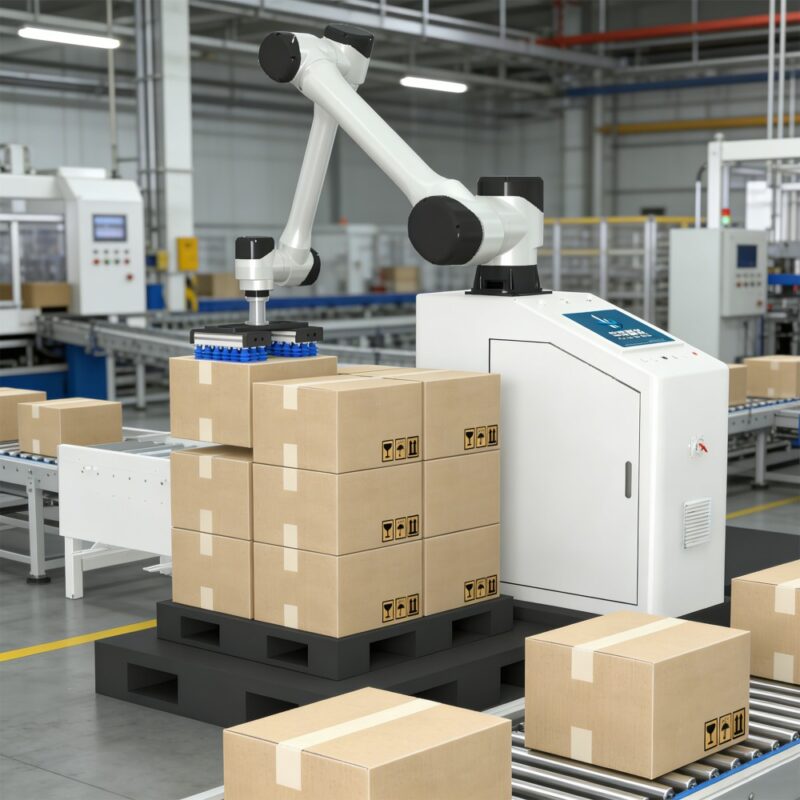
The Mystech Woods MD-630 is an intelligent, flexible, and highly integrated palletizing solution. It aims to improve production efficiency while reducing labor intensity and operating costs.
Its touchscreen interface allows operators to generate palletizing patterns without programming knowledge. This feature can simplify task changes when production lines handle different products or stacking arrangements. Its compact structure and high payload capacity also give manufacturers useful factors to evaluate when planning flexible deployment.
The MD-630 can operate independently or integrate with automatic pallet dispensers and pallet conveyor systems. Manufacturers can therefore assess different configurations based on their production needs.
A standalone setup may suit a workstation with straightforward palletizing requirements. An integrated system may better support a packaging line that needs automatic pallet supply and finished-pallet transport. The right configuration depends on the existing layout and required level of automation.
The MD-630 serves industries such as food and beverage, pharmaceuticals, daily necessities, cosmetics, metal products, and carton packaging. These applications often involve different package formats and production schedules. Manufacturers can evaluate the robot against their specific loads, pallet patterns, cycle times, and workstation requirements.
For multi-line deployment, they should also assess the practical time required to move the robot between stations. This step helps determine whether the system can meet production targets without creating new bottlenecks.
Portable Palletizing Robot vs. Dedicated Palletizing System
A portable robot and a dedicated palletizing system serve different operational needs. Manufacturers should base their decision on production demand rather than the number of lines alone.
A portable palletizing robot may suit factories with staggered production schedules, compatible products, and moderate palletizing workloads. It offers the flexibility to serve different workstations and may reduce the need for duplicated equipment.
A dedicated palletizing system may suit lines that operate continuously or require high throughput. It avoids frequent relocation and allows manufacturers to configure the equipment around one specific process.
Some factories may benefit from a hybrid arrangement. They can install dedicated palletizers on high-output lines and use a portable robot for lower-volume or variable-demand tasks. This approach balances production continuity with deployment flexibility.
Can One Portable Palletizing Robot Meet Your Production Needs?
Yes, one portable palletizing robot can serve multiple production lines when the workload, product requirements, and operating schedule support shared use. The key is to balance flexibility with sufficient palletizing capacity.
The Mystech Woods MD-630 provides several features worth evaluating for this purpose. Its program-free touchscreen operation simplifies palletizing pattern creation, while its compact structure supports flexible deployment planning. It can also operate independently or integrate with pallet dispensers and pallet conveyor systems.
Before selecting a configuration, manufacturers should map the workload of each line and identify periods of overlapping demand. They should also calculate relocation time, confirm product compatibility, and review workstation safety requirements.
With these factors in place, manufacturers can determine whether one portable palletizing robot can support multiple lines efficiently. A well-planned shared system can improve equipment utilization, control investment costs, and make palletizing automation more adaptable to changing production needs.